A long-form essay series by Bruce Tate
The AI Crises Series
What AI is doing to engineering teams — and what to do about it.
A long-form essay series on the shift AI is forcing on engineering work: seniors drowning in review, juniors shipping without learning, codebases accumulating drift faster than humans can hold in their head. And what to do about all of it.
Three essays are live now, with more on the way.
Browse all articles in the seriesAvailable now
Essay 1
The Sludge on the Wall
What our developers and a spilled cold brew are trying to tell us.
The opening essay. Three people — Marcus the principal, Priya the junior, the VP running the team — all sensing something has gone wrong while the dashboard stays green. The AI dividend has arrived, and most of the industry is cashing it the wrong way. The seed corn is being eaten.
Read "The Sludge on the Wall"Essay 2
How Better Tools Can Make Things Worse
When tools outrun craft.
A cautionary tale grounded in real engagements. Functional duplication. Conceptual proliferation. Feature accretion. The IoC layer breaking down because it was the work agents can't do. And the most uncomfortable thing: even the people who recognize the pattern catch themselves making the same mistakes.
Read "How Better Tools Can Make Things Worse"Essay 3
The Trainable Things
What juniors need to learn now.
The first prescription. Four trainable skills that used to transfer by osmosis but no longer do: PR size and storytelling, architecture-level reading (IoC, errors, concurrency), the throw-it-away discipline, and prompt layering. The industry is hiring fewer juniors. Bruce's bet is the opposite.
Read "The Trainable Things"Coming next
The next essay extends the argument from individual craft to engineering organizations:
Essay 4
Coming soonHow Juniors Become Seniors
What we used to be protecting.
The org-level prescription. The asset moved from the codebase to the people who can shape it correctly. Train seniors too. Protect senior craft on the calendar. Measure mentorship. Stop using throughput as a signal. Keep the juniors who'll be your seniors in 2030.
After June
The next cluster
Bruce is writing the next cluster now, publishing through July and August. Working titles:
- The Investment Argument — what the AI dividend should be paying for, in concrete terms
- What Skills Are Different Now — how the work has changed at the senior level
- How Training Programs Have to Change — the curriculum question
Live sessions
Plus future live sessions with Bruce
Short-form interviews, AMAs around specific essays, and occasional deep dives on the engineering patterns the series points at.
Sign up above to get notified when each one goes live.
Why this series
Documenting a shift in real time.
"I started writing a book called AI for Programmers a few years ago. By the time we finished a draft of chapter four, all three of our anchoring ideas had been integrated into the tools themselves. We stopped writing. If the people writing the book about a thing can't write it fast enough, what chance does a working team have?"
"Not much, it turns out. Not without a different kind of effort than anyone is currently making. The series is that effort."
The series isn't selling a product. It's documenting a shift in real time, in the open, in the hope that being honest about the problem is the first step to fixing it. Most of the industry is pretending it's fine. This series is what it looks like to stop pretending.
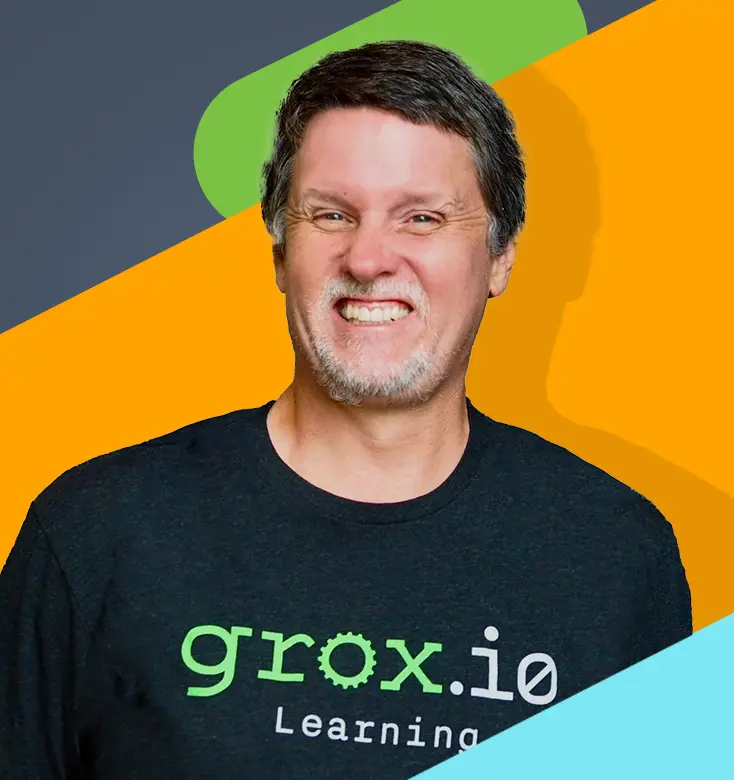
About the author
Bruce Tate
Bruce is the author of more than ten programming books, including Seven Languages in Seven Weeks, Programming Phoenix, and Designing Elixir Systems with OTP. He's been training engineering teams for two decades. He runs Groxio, a small teaching company focused on Elixir, OTP, Phoenix, LiveView, and the discipline around AI-assisted engineering.
The AI Crises Series lives at the intersection of those things. Bruce isn't writing this from theory — he's writing it from the rooms where teams are figuring this out in real time.
For engineering managers reading this
If you've been recognizing your team in these essays — that's not an accident.
The series is the public version of what Bruce trains engineering teams to navigate.
The essays describe the problem. AI Engineering Enablement is what we do with teams who want to fix it: a private 3–4 day intensive plus ongoing advisory, scoped through a diagnostic conversation. Elixir, Phoenix, OTP, LiveView, Ecto, Ash, Postgres — and the discipline around AI-assisted delivery.
This is not a generic AI productivity workshop. It is practical team training for engineering organizations adopting AI on real Elixir codebases.
Train your team to use AI without losing architectural control.
The first step is a short conversation. We look at your team's current Elixir experience, AI usage, review bottlenecks, and architecture concerns — then decide together whether a private intensive plus ongoing advisory is the right fit. No pitch deck, no proposal up front.
After the series — other ways to work with Bruce
For individual developers reading this
If you're an individual developer (not running a team), the path looks different:
Courses and mentoring
The Stop Vibe Coding blog series + 8 video courses (Elixir, OTP, LiveView, AI Agents, Ecto, Nerves, Nx & Axon, LiveBook). Plus 1-on-1 mentoring with Bruce when you need to work through real production code.
Start free
The Free Elixir Course (Module 01) — introduces functional thinking and the mental models behind Elixir. Open it and play with it.
FAQ
- How often do new articles publish?
- The first three essays are available now. New articles publish as Bruce finishes each cluster, and we notify subscribers the day each new piece is live.
- Can I just read the articles without signing up?
- Yes. All articles are public on grox.io/blog and Bruce's LinkedIn. The signup gets you a notification when the next one is live — no need to remember to check.
- Are these for individuals or for teams?
- Mostly for engineering managers, CTOs, and tech leads — the people deciding how their teams adopt AI. Individual developers read these too and find them useful, but the prescriptions are org-level. The deeper-dive paths are different for each audience: courses for individuals, private team training (AI Engineering Enablement) for teams.
- Will there be live sessions?
- Yes — short-form interviews with Bruce, occasional AMAs, and deep dives. Sign up and you'll get notified when one is scheduled.
- Is this just the LinkedIn series?
- The same essays appear on both grox.io/blog and Bruce's LinkedIn. Signing up here is the most reliable way to get notified when something new is up — LinkedIn's algorithm doesn't always deliver.
Ready?
Get the next essay the day it publishes.